
Why trapped ions?
Each ion, which is trapped in a deep potential generated by electromagnetic fields, can be used as a highly stable quantum bit. They also provide long coherence times and high gate fidelities — enabling systems to run quantum circuit with fewer error-correction overheads.
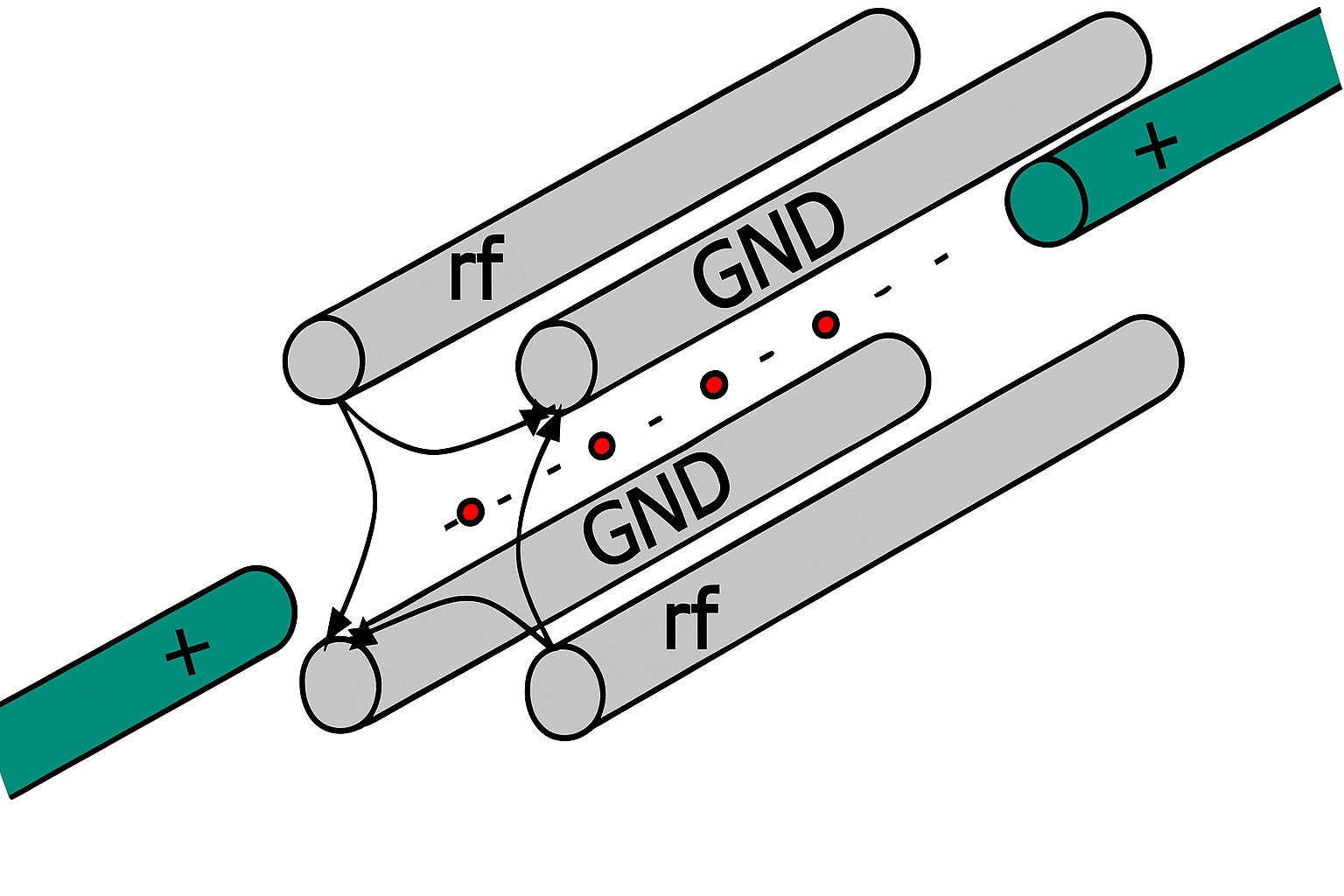 Linear Paul trap
 Trapped Ions
Characteristics of Ion-Trap Qubits
High Fidelity Quantum Operations
⇒ Extremely low error rate in quantum gate operations and in state preparation and measurement (SPAM)
Long Coherence
⇒ Preserves quantum states for extended periods
All to All Connectivity
⇒ Provides flexibility in algorithm design and implementation of an error-correction code with a low code rate
• Drawbacks:
•Slow gate operation speed
•Difficult to expand the number of qubits
Go beyond scalability barriers
Based on the research foundation pursued by Prof. Hiroki Takahashi over the past 15 years, leading the research on a "Photonically Interconnected Ion Trap Quantum Computer" as part of the OIST / Moonshot Project since 2020.
Photonically Connected Architecture:
Expanding Qubits by Connecting Multiple QPUs
Qubitcore's Micro-optical cavities enable efficient photon extraction which ensures fast & reliable inter-module communication, a prerequisite towards practical realization of FTQC.
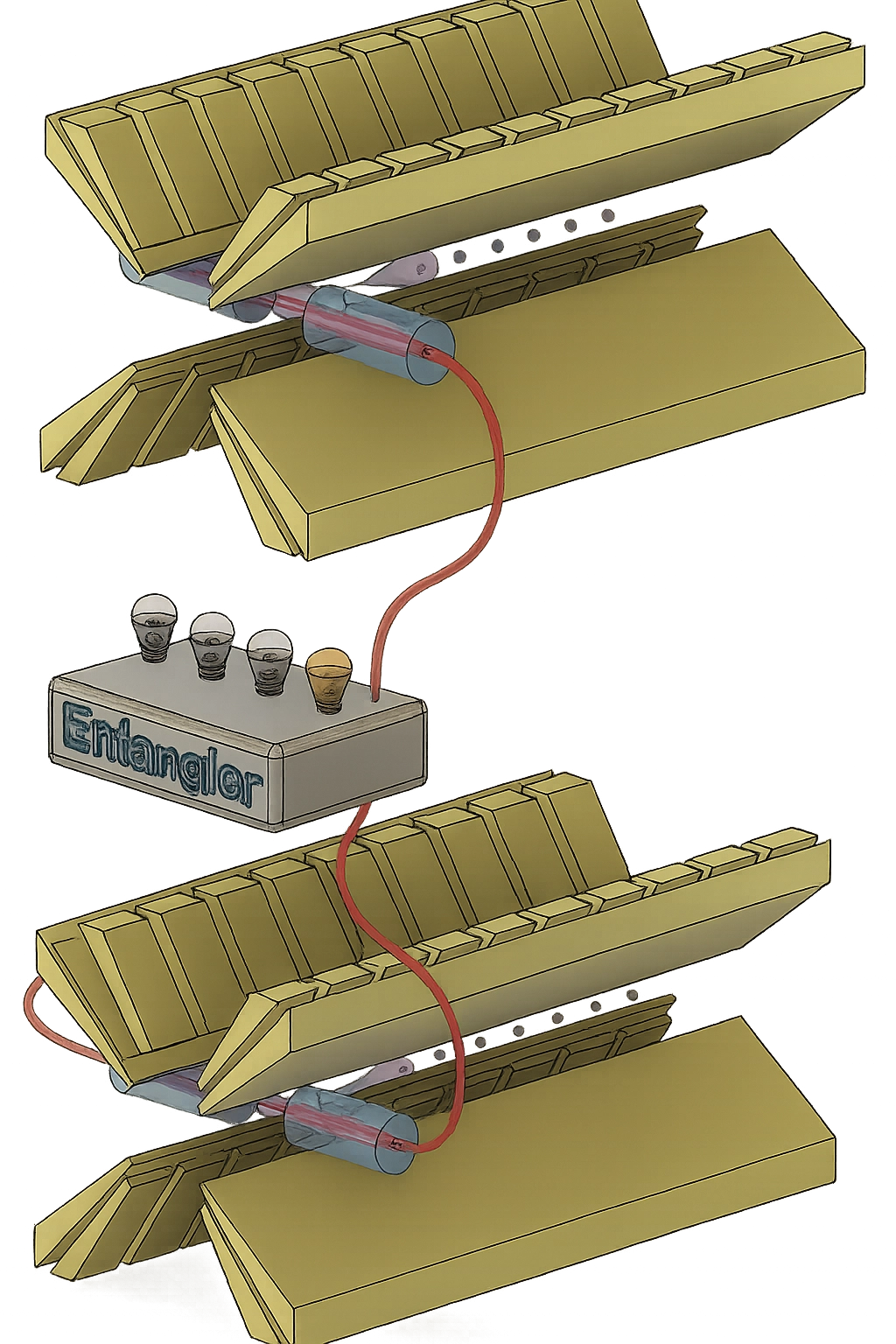
Integrated with QCCD architecture:
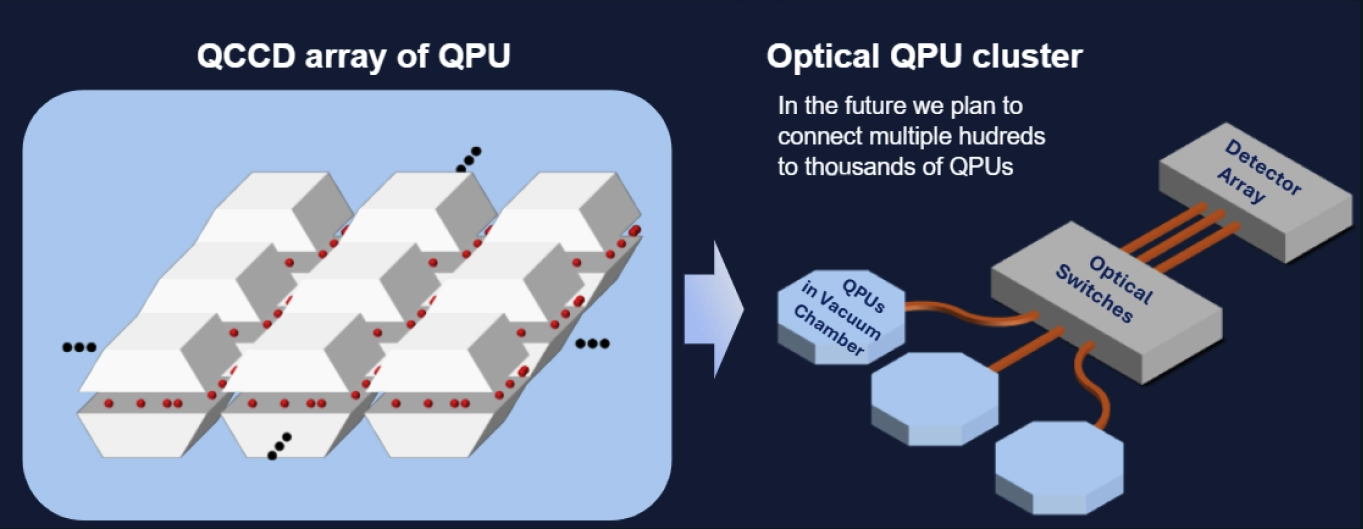
Scaling Up Qubits Within a Single QPU
Quantum Charge-Coupled Device (QCCD) architecture enables shuttling ions between multiple trapping potentials within a single QPU. Integration of the QCCD architecture with our microcavity within a single QPU enables a distributed quantum computing architecture via optical switches.
Our offering model
We modeled the product line around the initial quantum computer hardware, which will gradually increment towards full stack quantum computer offering as follows:
• QCaaS (Quantum Computing as a Service) as on or off premise hardware
• QC Cloud service as Private or Public cloud services